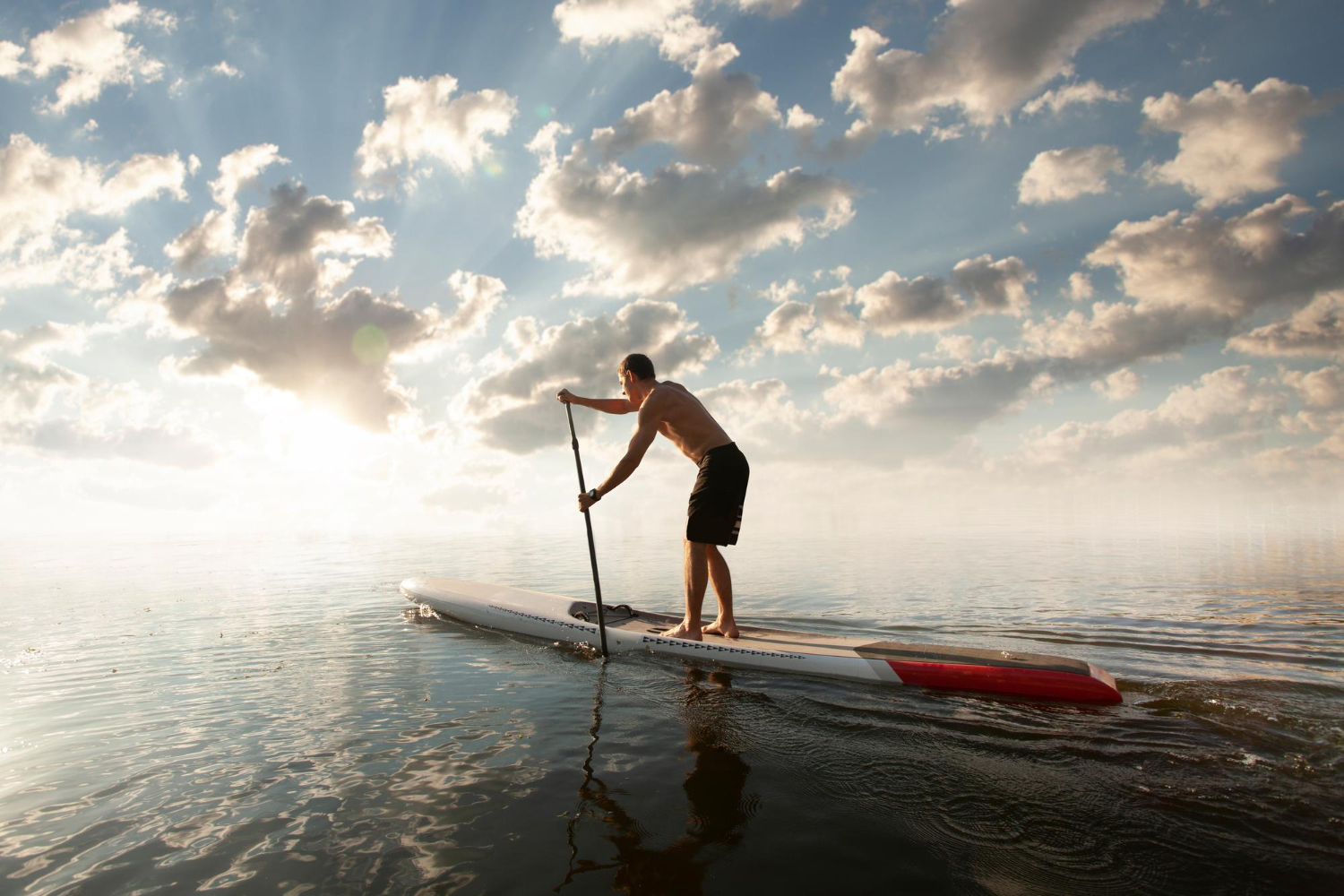
If you have ever spent an afternoon gliding across a calm lake or navigating a light coastal swell, you will know that stand up paddle boarding (SUP) feels more like a getaway than a gym session. But do not let the peaceful scenery fool you. Beneath the surface of that tranquil glide, your body is working incredibly hard.
Whether you are looking to shake up your fitness routine or find a low impact way to build strength, paddle boarding is one of the most effective full body workouts you can do. At Supfit, we believe that the best training happens when you step out of the gym, combining physical challenge with the mental clarity of being outdoors.
Is paddle boarding a good workout?
In short, yes. Paddle boarding is a rare type of exercise that combines cardiovascular endurance, strength training, and balance all at once. Because the board is a dynamic, moving platform, your muscles never truly get a rest.
A leisurely hour of paddling on calm water can burn between 300 and 450 calories. This is roughly double what you would burn on a moderate walk. If you up the intensity with SUP touring or racing, that figure can easily climb to over 700 calories per hour. This rivals a high intensity cycling session or a steady run.
The beauty of SUP is that it is low impact. Unlike running, which can be tough on the knees and ankles, paddle boarding offers a fluid motion. It protects your joints while still providing a serious burn.
The secret is in the core
Many people assume paddle boarding is all about the arms. While your shoulders and back certainly get a workout, the real power comes from your core. Every time you dip your blade into the water, your obliques, abdominals, and lower back engage. This transfers power from your upper body down through your legs and into the board.
Even when you are not paddling, your deep stabilising muscles, specifically the transverse abdominis, are firing constantly just to keep you upright. This constant micro adjustment is why many regular paddlers notice a significantly more defined midsection and improved posture after just a few weeks on the water.
How to train your core for the water
To get the most out of your time on the board, it helps to build a foundation of stability on dry land. A strong core does not just make you faster. It makes you more stable in choppy conditions and helps prevent the dreaded lower back ache that can sometimes follow a long session.
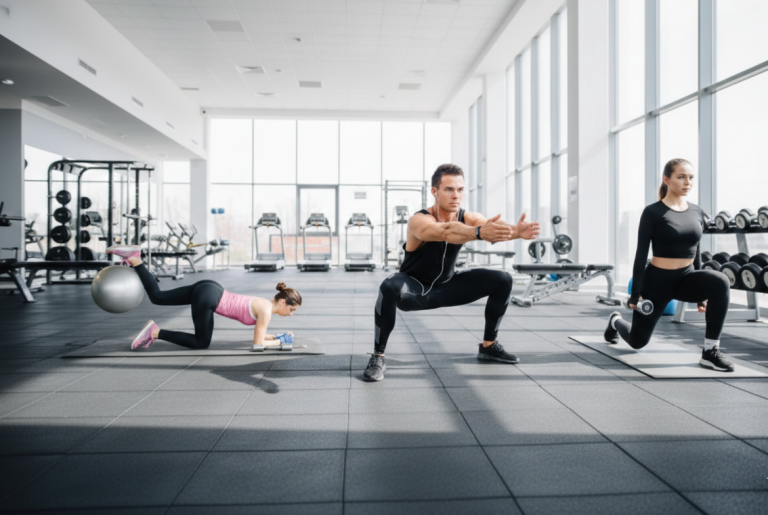
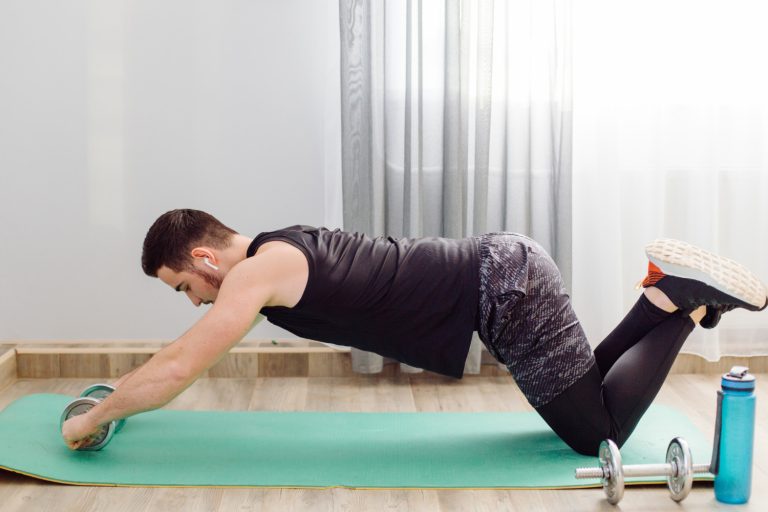
Below is a simple, effective paddle board workout routine you can do at home with no equipment.
The SUP-Ready Core Circuit
Perform this routine two to three times a week. Complete each exercise back to back, rest for 60 seconds, and repeat for three rounds.
1. The Static Plank (45 seconds) Focus on keeping a straight line from your head to your heels. To make this SUP specific, imagine you are pulling your elbows towards your toes to create extra tension in your midsection.
2.Russian Twists (20 reps) Sit on the floor with your knees bent and feet slightly lifted. Rotate your torso from side to side, touching the floor on each side. This mimics the rotational power needed for a strong paddle stroke.
3.Bird-Dog (12 reps per side) Get on all fours. Extend your right arm forward and your left leg back simultaneously. Hold for two seconds, focusing on keeping your hips level. This is a great move for cross body stability and balance.
4.Bodyweight Squats (15 reps) Your legs are your shock absorbers on the water. Keep your chest up and weight in your heels. This builds the foundational strength needed to stay standing when the water gets a bit bumpy.
5.Side Plank (30 seconds per side) Strong obliques are essential for maintaining your line in a crosswind. Keep your hips high and your shoulder tucked directly under your elbow.
Bringing it all together
The best part about using paddle boarding as a workout is that it rarely feels like a chore. Much like preparing for a big event or managing your athletic performance, consistency is key.
Next time you head out, try to focus on paddling with your core rather than just your arms. Keep your knees slightly bent, engage your stomach, and use your whole body to drive the board forward. You will find that you can go further, stay out longer, and head back to shore feeling stronger than when you started.