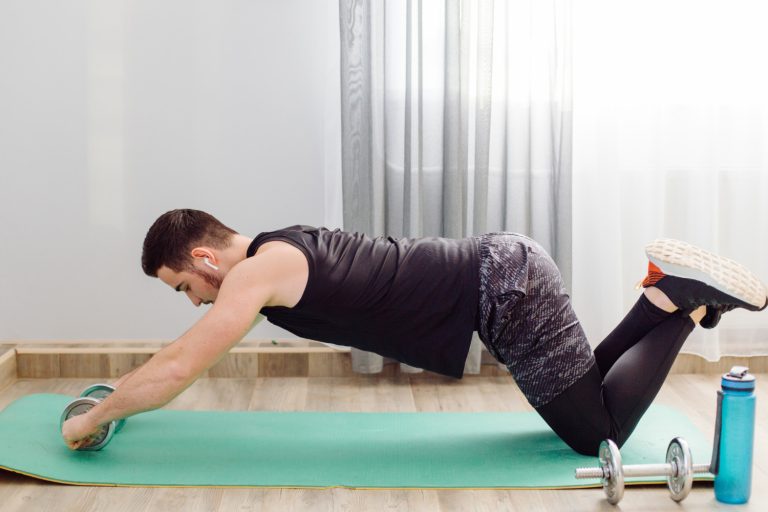
When talking about back day, the conversation usually gravitates towards the show muscles. These are the wide lats and thick traps that create a powerful silhouette. However, the foundation of your entire posterior chain lies in the lower back. The lumbar region, specifically the erector spinae, acts as the structural bridge between your upper body and your legs.
If you want to move better, lift heavier, and stay injury free, you cannot afford to ignore this area. The good news is that you do not need a gym full of specialised machines to build a bulletproof spine. A simple pair of dumbbells is more than enough to develop functional strength and stability.
Why the Lower Back Matters
In the world of fitness, the lower back is often treated with a mix of fear and neglect. We worry about throwing it out, yet we spend most of our days sitting in chairs that weaken those very muscles. Strengthening the lower back through controlled resistance training is one of the most effective ways to prevent chronic pain and improve your overall .
By working out the back with dumbbells, you introduce a level of stabiliser muscle activation that you simply do not get with barbells or machines. Dumbbells require each side of your body to work independently. This helps in highlighting and correcting imbalances before they lead to injury.
The Principles of Safe Lower Back Training
Before diving into a dumbbell back routine, it is vital to understand the neutral spine concept. Your lower back is designed to support loads while maintaining its natural curve. The goal of these exercises is not to flex and extend the spine aggressively under weight, but to strengthen the muscles that keep the spine stable.
A common mistake when performing back lifts with dumbbells is using momentum. Because the lower back is sensitive, every movement must be deliberate. If you find yourself jerking the weights up, the load is too heavy. The Supfit philosophy centres on quality over quantity. It is far better to use a lighter pair of and maintain perfect form than to risk a strain for the sake of a heavier lift.
The Essential Dumbbell Lower Back Routine
This routine is designed to be performed twice a week. It focuses on the three pillars of spinal health, which include hinge strength, isometric stability, and rotational control.
1. Dumbbell Romanian Deadlift (RDL)
The RDL is the gold standard for posterior chain development. Unlike a standard deadlift, the RDL focuses on the eccentric phase, which is incredible for building muscle density in the lower back and hamstrings.
- How to do it: Stand with feet hip-width apart, holding a dumbbell in each hand in front of your thighs. Keep a slight bend in your knees. Hinge at the hips, pushing your glutes back as if trying to touch a wall behind you. Lower the weights along your shins until you feel a stretch in your hamstrings, then drive through your heels to return to the start.
- Pro Tip: Keep your shoulder blades tucked into your back pockets to ensure your upper back does not round.
2. Dumbbell Good Mornings
Typically done with a barbell, performing this with a single dumbbell held against your chest makes it a fantastic back workout at home with dumbbells. It shifts the centre of gravity and forces the erectors to work hard to keep you upright.
- How to do it: Stand with your feet shoulder-width apart. Hold a single dumbbell vertically against your chest, hugging it tight with both arms. Soften your knees slightly. Do not lock them out, but do not squat either. Send your hips straight back. Imagine you are trying to close a car door with your bum. Lower your torso until it is almost parallel with the floor. Stop the moment you feel your lower back want to curve. Drive your hips forward to return to a standing position, squeezing your glutes at the top.
3. Renegade Rows
While often seen as a core or shoulder move, the renegade row provides an intense isometric workout for the lower back. It teaches your body how to resist rotation while under load.
- How to do it: Get into a high plank position with your hands gripping the handles of two dumbbells. Keeping your hips as still as possible, row one dumbbell up to your hip, then lower it and repeat on the other side.
- Note: This is excellent if you are looking for integrated dumbbell back and shoulder exercises.
4. Weighted Superman
This is a floor-based movement that targets the deep muscles of the lower back. Adding a very light dumbbell held between your hands makes it highly effective.
- How to do it: Lie face down on a mat. Hold a light dumbbell with both hands extended in front of you. Simultaneously lift your arms, chest, and legs off the floor. Hold for two seconds, feeling the contraction in your lower back, then slowly lower.
Consistency and Recovery
Training the back is not just about what you do in the gym. It is also about how you recover. Much like the advice we give for, the key is active recovery. On your off days, focus on mobility work and walking to keep the blood flowing to the lumbar discs.
More than 80 out of 100 adults will experience back pain at some point in their lives. By learning how to train the back with dumbbells properly, you are not just building a stronger physique. You are essentially buying an insurance policy for your future mobility. Keep your movements crisp, your spine neutral, and your progress steady.