Holding a plank until the shoulders shake or powering through a hundred crunches often leads to the same frustrating result: a sore neck and a back that still feels weak. For those starting a fitness journey, it can feel as though the core simply won’t engage no matter how many repetitions are completed. Usually, the issue isn’t a lack of effort; it is that the deep stabilising muscles are staying dormant while larger muscles take over.
To truly transform stability, a gym full of heavy machinery isn’t required. In fact, two of the most effective tools for a resilient midsection can fit inside a small kit bag. As an authority in functional movement, Supfit identifies Pilates workout balls and resistance bands as the ultimate duo for beginners to safely activate the muscles that support the spine, improve posture, and power daily movement.
Why Balls and Bands are the Beginner’s Secret Weapon
Most traditional floor exercises allow the larger, outer muscles to do all the heavy lifting. For a beginner, this often leads to straining the neck or hip flexors rather than working the abdomen. When learning how to do Pilates exercises at home, using small props ensures you are targeting the right areas from day one.
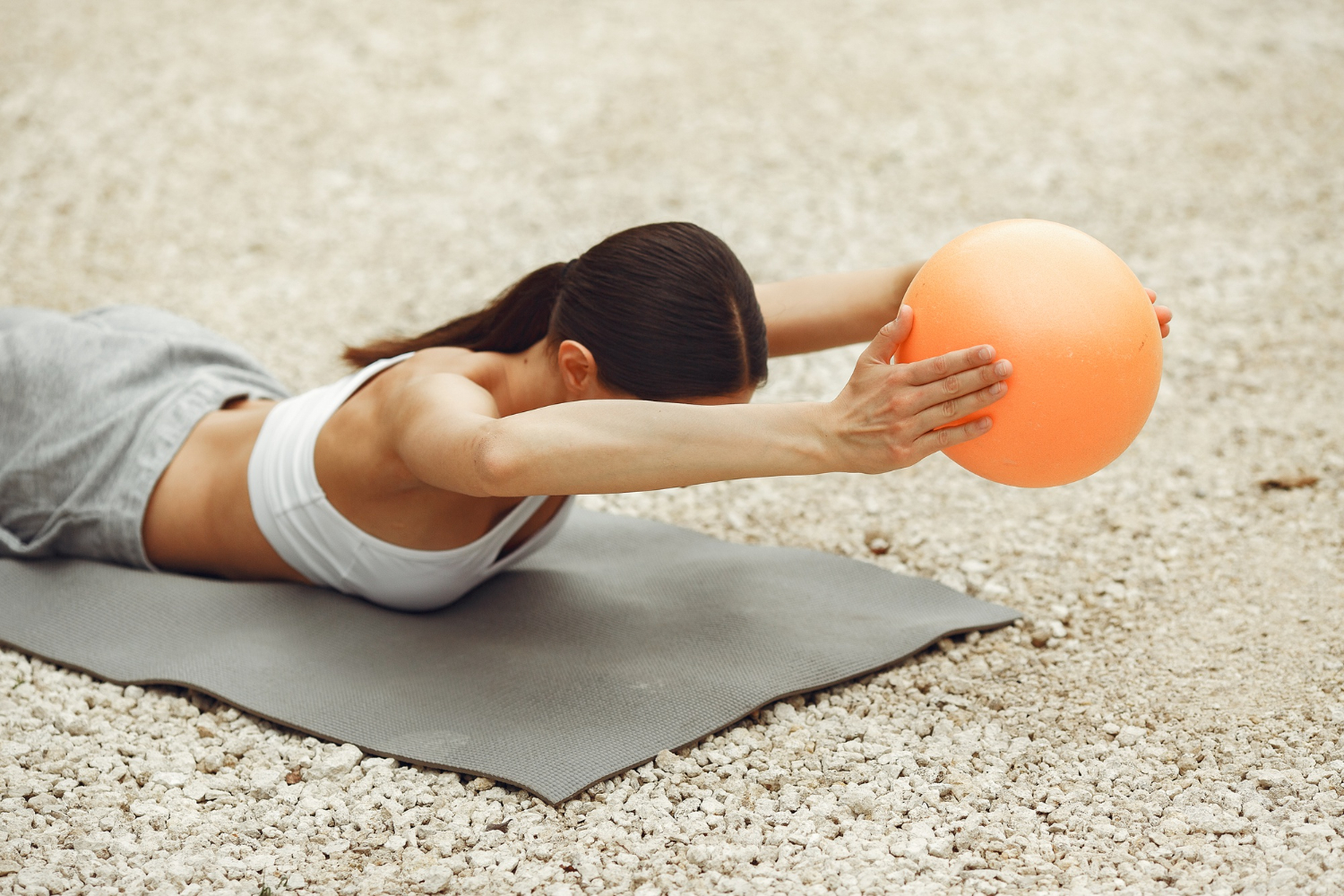
- The Pilates Ball: By creating a soft, unstable surface, the ball acts as a biofeedback tool. Whether placed under the lower back for support or squeezed between the knees, exercises with a Pilates ball remind the deep-seated muscles, like the transversus abdominis, to stay switched on.
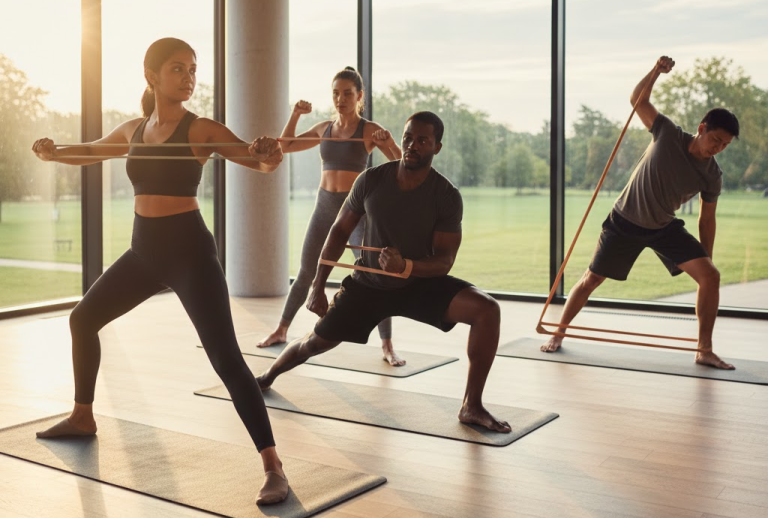
- Resistance Bands: Unlike heavy weights, exercise bands for Pilates provide gentle, linear resistance. The tension builds gradually as the band is stretched, allowing a beginner to stay in control of the movement without the risk of dropping a heavy plate or straining a joint.
Performing exercises on unstable surfaces, such as a pilates ball, significantly increases muscle recruitment. For someone just starting out, this means every movement is more effective, building a foundation of functional strength that makes everyday tasks, like lifting groceries or sitting at a desk, much easier.
The Supfit Functional Core Quiz
Can your core handle your daily life? Perform these 6 simple checks at home today. Take note of your score now, follow our routine for 30 days, and return to see how many NO answers you have turned into a YES.
1. Can you stand on one leg and put on a sock without leaning against a wall?
2. Can you stand up from a dining chair with arms crossed (no rocking)?
3. Can you sit up from lying flat in bed without using your elbows?
4. Can you carry a heavy bag in one hand for 30s without leaning?
5. Can you reach arms high without arching your back or popping ribs?
6. Can you crouch to tie a lace and stand up without grabbing furniture?
The Supfit Beginner Circuit: A Simple Step-by-Step Routine
When considering pilates for core strength, remember that quality is far more important than speed. Aim for 8–10 repetitions of each exercise, 3 times per week.
1. The Supported Inner-Thigh Bridge (Using the Ball)
- The Goal: To stabilise the pelvis and gently wake up the lower abdominals.
- The Set-up: Lie on the back with knees bent and feet flat on the floor. Place the Pilates ball between the knees.
- The Move: Give the ball a gentle squeeze. Maintain that squeeze while slowly lifting the hips toward the ceiling. Hold for three seconds at the top, then slowly roll the back down to the mat and repeat.
- The Focus: Ensure the squeeze on the ball stays consistent; this keeps the pelvis steady.
2. The Beginner’s Dead Bug (Using the Band)
- The Goal: To learn how to move the legs without the lower back arching.
- The Set-up: Lie on the back. Loop a resistance band around both feet. Lift the legs into a tabletop position (knees bent at 90 degrees as if sitting in a chair).
- The Move: Keep the left leg perfectly still. Slowly push the right foot away, stretching the band, then bring it back to the start. Switch legs.
- The Focus: Only lower the leg as far as possible without the lower back lifting off the floor.
3. The Seated Ball Twist (Using the Ball)
- The Goal: To strengthen the obliques (the waist muscles) and improve spinal rotation.
- The Set-up: Sit on the floor with knees bent. Hold the ball in both hands at chest height. Lean the back slightly; just until the stomach muscles feel tight.
- The Move: Slowly rotate the chest to the right, aiming the ball toward the floor beside the hip. Return to the centre, then twist to the left.
- The Focus: Keep the feet glued to the floor. If they lift, sit up a little straighter.
4. The Wall Plank with Band (Using the Band)
- The Goal: To build core and shoulder stability without the intensity of a floor plank.
- The Set-up: Place a loop band around the wrists. Stand facing a wall and place the forearms against it at shoulder height.
- The Move: Step the feet back slightly so there is a gentle lean toward the wall. Pull the wrists slightly apart to create tension in the band. Hold this position for 20 seconds while breathing deeply.
- The Focus: Keep the body in a straight line from head to heels. Do not let the hips sag toward the wall.
Supfit Guidance for Success
- Regulate Breathing: Avoid holding the breath. A helpful tip is to exhale on the effort. Blow air out as the hips lift or the leg extends.
- Adjust Ball Inflation: A common beginner mistake is over-inflating the ball. If it feels too wobbly, let a small amount of air out. A slightly squishier ball offers more grip and support.
- Listen to the Body: Feeling a burn in the muscles is normal, but sharp pain in the back or neck is a sign to stop and check the form.
Consistency is the hidden ingredient in any transformation. Set a reminder to re-take the Supfit Functional Core Quiz exactly 30 days from today. We are confident that by then, your newfound stability will be felt in every step, reach, and lift of your daily life.